How to measure a B2B podcast sponsorship: tracking links, promo codes, 'how did you hear about us' answers, branded search and pipeline, set up before launch.
Podcast advertising is harder to measure than a search ad. People hear your name on a walk or in the car, then search for you later, often days later and on another device. If you only count clicks on a tracking link, you will undercount what the campaign did.
The fix is to plan measurement before the first episode goes out, using several signals at once. This guide sets out what to track, how to read it, and what a realistic result looks like for a B2B sponsor.
Set up before launch
A tracking link per show. A short, memorable address for each show, such as yourcompany.com/firstcheque, so you can see which show sent people.
A promo code per show, if you sell anything self-serve. Codes survive the gap between hearing and buying better than links do.
A landing page that matches the read. Repeat what the host said, name the show, and give one clear next step. Do not send podcast listeners to your homepage.
A "How did you hear about us?" field on every sign-up, demo and contact form, as free text or with "Podcast" as an option. This is the signal that catches people who never clicked anything.
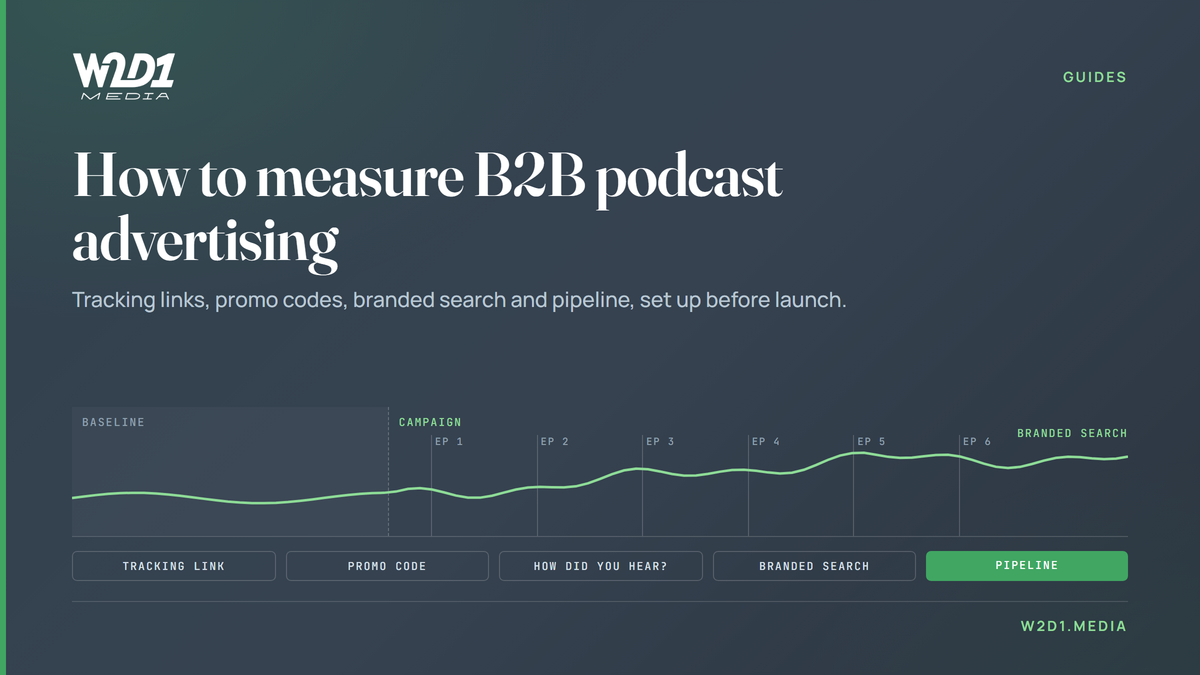
A baseline. Note your branded search volume, direct traffic and inbound demo requests for the four weeks before launch.
What to watch during the campaign
Visits and sign-ups from each tracking link and code. The direct, attributable number. It will be the smallest number in your report.
Branded search. Searches for your company name in Google Search Console. A lift that lines up with episode release dates is a strong sign the reads are working.
Direct traffic. People typing your address in. Look at the days after each episode goes out.
Self-reported attribution. Every "heard you on a podcast" answer in your forms and on sales calls. Ask your sales team to record it in the CRM.
Pipeline. The deals where podcast shows up anywhere in the history. For a long B2B sales cycle, this is the number that matters, and it arrives last.
How long to wait before judging it
B2B buyers rarely act on the first read. A single episode tells you very little. Judge a campaign after a full run, usually six episodes or more, and keep counting pipeline for a few months after it ends.
What good looks like
For B2B, success is not a spike in clicks. It looks like:
more prospects who already know your name when sales reaches out
"I heard you on a podcast" coming up in discovery calls
branded search and direct traffic holding above the baseline after the campaign ends
a handful of deals you can trace back to the show
If you sell to a small, defined audience, a few of the right deals can pay for a campaign many times over. Measure against the value of a deal, not against cost per click.
Common mistakes
Counting only link clicks. They miss most of the effect.
Changing the offer mid-campaign. You lose the ability to compare shows and episodes.
Judging after one episode. It is too early to see anything.
No baseline. Without the four weeks before, you cannot tell lift from normal variation.
How Day One reports on campaigns
On Day One campaigns we set up tracking links, promo codes and landing pages with you in the planning week, and report back on results once the campaign is live, so you can do more of what works. See how Day One sponsorship works, or read what B2B podcast sponsorship costs in Australia.
If you want help planning a measurable campaign, book a call.