
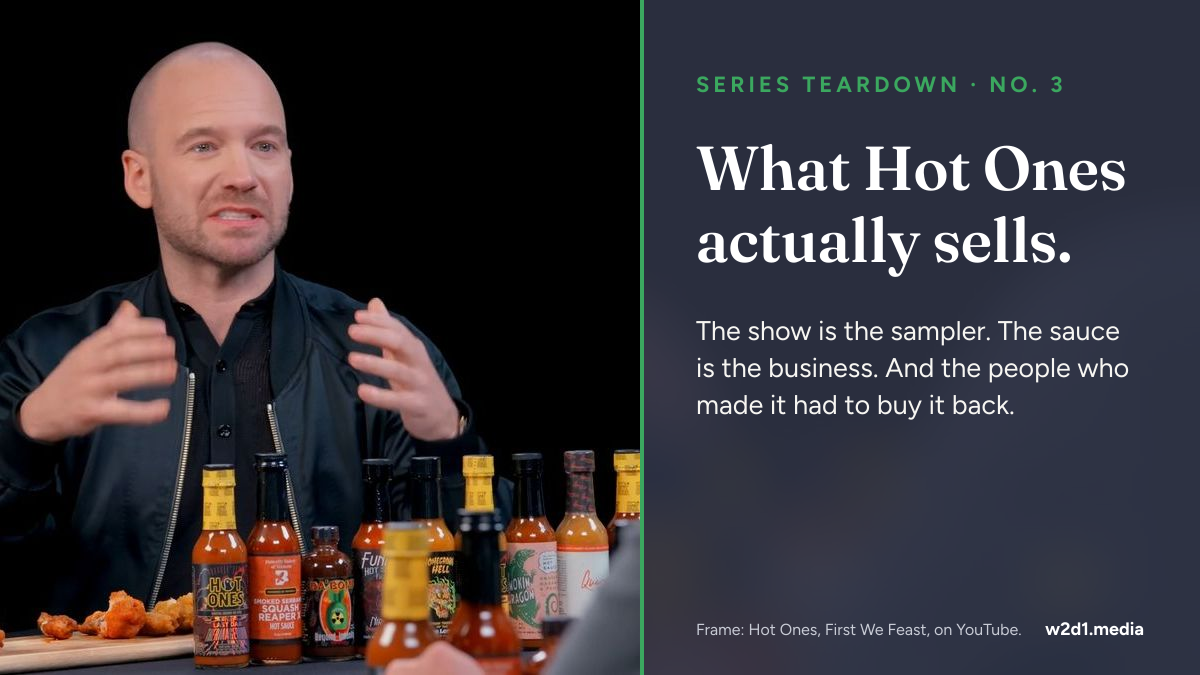
Ten wings, ten sauces, one celebrity, and questions that get more personal as the heat goes up. Everyone knows the format. Fewer people know that the show is the sampler and the sauce is the business, or that the people who made it had to buy it back for US$82.5 million.
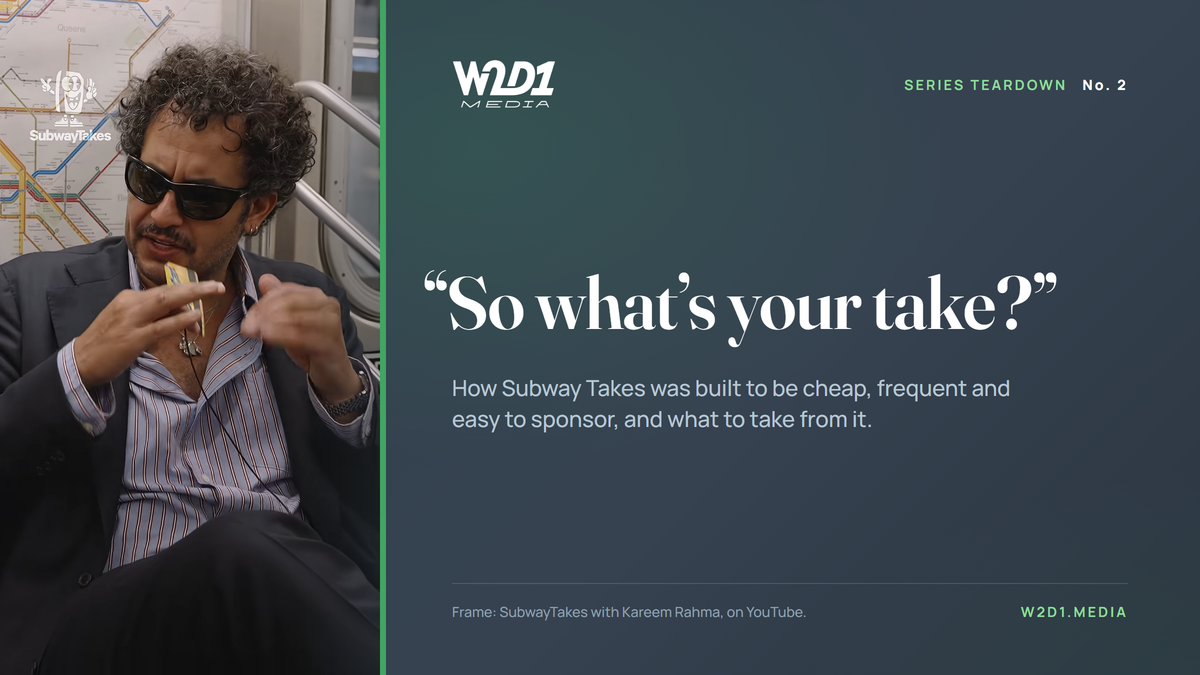
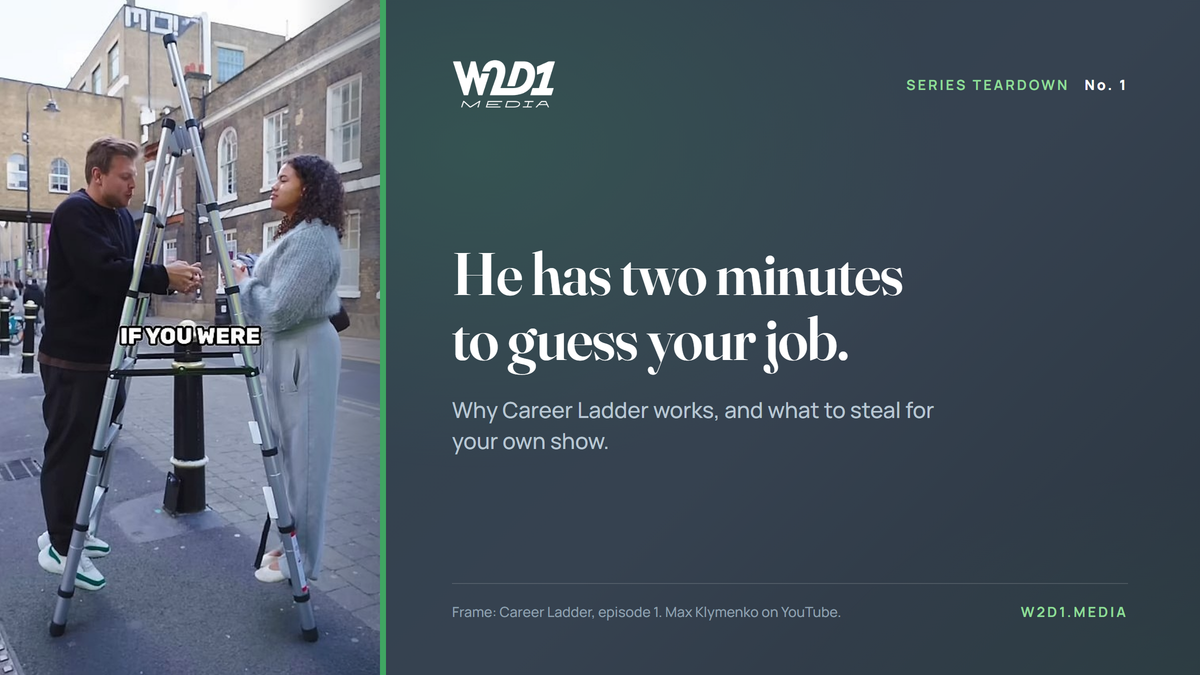
Series Teardown is a column about content series that are unusual in format and have the evidence to show they work. One series per piece: how it started, the mechanics underneath it, the production reality nobody posts about, and what you can take from it for your own show. Career Ladder and Subway Takes were the first two. This one is the show both of them are measured against.
The premise
Sean Evans sits across a table from a famous person. Between them are ten chicken wings, each coated in a hotter sauce than the last. The first is sriracha, about 2,200 Scoville units per Wikipedia. The tenth is The Last Dab, rated above two million. Evans asks a question, they both eat a wing, he asks another. The questions start soft and get more personal as the heat climbs. Guests who do not finish go to the Hall of Shame. The tagline is "the show with hot questions, and even hotter wings."
That is the whole format, and it has not changed since the first episode on 12 March 2015. Watch any episode and you will see it, for instance the season 29 opener with Jason Segel on YouTube, 21 minutes, January 2026.
How it started
First We Feast began in 2012 as the food blog of Complex magazine, edited by Chris Schonberger, who had come from Time Out New York. Its YouTube channel launched in 2014. Evans was a copywriter in Chicago who had done a few interview videos for Complex, including Snoop Dogg and 2 Chainz at the 2014 NBA All-Star weekend. Complex liked them enough to offer him a job, and he moved to New York.
The idea, per Wikipedia, came out of a brainstorm between the two about how to do a fresh version of the celebrity interview. Schonberger cites Alexa Chung's British show Popworld as the model. Evans has said the hot sauce was pitched to him as a situational gag, a bit of business to make a web interview funny, and that the team did not have high aspirations for it. The first guest, in March 2015, was the rapper Tony Yayo.
What they found in the first few episodes was the thing the whole show now rests on. The sauce broke people. Guests who arrived with their late-night talking points lost them around wing six, and what came out instead was better television than the talking points would have been. The gag became the mechanism.
By 2018 the show had a Shorty Award and a Streamy. Digiday reported that November that First We Feast expected more than US$7 million in hot sauce sales that year, and that 85 percent of its revenue now came from outside advertising. Three years earlier it had been all ads. BuzzFeed bought Complex Networks in 2021, then in February 2024 sold most of Complex to NTWRK for US$108.6 million and kept First We Feast. In December 2024 it sold that too, for US$82.5 million in cash, to a group made up of Schonberger, Evans, Crooked Media, Rhett and Link's Mythical Entertainment and an affiliate of Soros Fund Management. Schonberger became chief executive and Evans chief creative officer. At the time of the sale NBC put the channel at 14 million subscribers and more than 4 billion views. Since then: a Critics' Choice nomination in 2026, a Netflix series, Hot Ones: Extra Heat, from July 2026, and two new First We Feast shows in 2026, Slice Joint and Hot Ones: Game Night. Local versions have run in France, Italy, Quebec and Germany, and Seven's 7plus added a linear Hot Ones channel in Australia in February 2025.
Why it works
Here is what I think is doing the work, and most of it is not the wings.
The heat is a truth serum and a clock. Every talk show wants the guest to drop the script. Hot Ones does not ask them to. It makes the script physically impossible to hold onto. By wing seven, nobody is doing their bit. The escalation also gives the episode a shape that a normal interview does not have: ten steps, rising stakes, a finish line, and a public record of who made it. The format carries the drama so the host does not have to manufacture it.
The questions earn the format. This is the part that gets copied least, because it is the part that costs the most. Evans told TheWrap in 2024 that a booking gives him about a week to "walk a mile in their shoes." He, his younger brother Gavin and Schonberger research every guest: profiles more than a decade old, every film, album and book, old interviews. CNN described it in 2025 as a family affair, and reporting on the show has the three dividing the reading between them, with the notes on a guest running to dozens of pages. Evans calls the next stage marinating, and says the goal is to start from real curiosity. The wings get the guest to drop their guard. The research is what makes dropping it worth watching. A show with the sauce and without the homework is a stunt.
The show is the sampler. The sauce is the product. Heatonist, a Brooklyn hot sauce shop that started as a pushcart, was asked to curate the wing lineup when the show was getting started. In September 2017 it launched The Last Dab, made with the pepper breeder Ed Currie, as the show's new tenth sauce: 1,000 bottles at US$20 each, per Tubefilter. Digiday reported the following year that a 1,000-bottle run of the next version sold out in under an hour, and quoted Schonberger comparing a sauce release to a sneaker drop. Heatonist now curates a new lineup every season and makes the show's signature recipes. Every episode is ten product demonstrations in a row, watched by millions, and the audience leaves wanting the thing the celebrity just suffered through. Ads were 15 percent of First We Feast's revenue in 2018. Licensing, syndication and commerce were the rest.
It has not moved. Ten wings for eleven years. Da' Bomb has sat at spot eight since season two. One host, one table, one set of rules. The show bookers plan from film and album release calendars months ahead, per TheWrap, which is another way of saying the format is now part of the promotional circuit, like a late-night couch. Saturday Night Live has parodied it twice. A format only becomes a fixture if it stays recognisable long enough for the audience, and the publicists, to know what they are getting.
What it costs to make
The clips look like two people eating chicken. The operation is closer to a daily newspaper.
About 40 episodes a year, per Wikipedia. For each one, a week of research by three people before the shoot, four cameras on the day, and two or three days of editing with Colin Higgins to cut the interview and build the sound bed, per TheWrap. A ten-day cycle from shoot to publish, repeated for more than a decade. A booker working months ahead against release schedules, and a standing habit of re-pitching guests who said no, because a no in 2019 can be a yes in 2024.
Then the costs that are not production costs. The show lived inside someone else's company for almost ten years: Complex, then BuzzFeed. The people who made it worth something had to assemble a group of investors and pay US$82.5 million to own it. The sauce business that drives the revenue is a separate company, Heatonist, which means the show's most valuable product has always been a partnership rather than a possession. And the research desk is three people, one of whom is the host's brother, which is not a scalable org chart. It is a craft operation that happens to be very large.
What to steal
Put the pressure in the format, not in the host. You cannot hire charisma that gets a guest off their talking points every time. You can design a situation that does it for you. It does not have to be heat. It can be a time limit, a game, a physical task, a question the guest has to answer before they can leave. The point is that the format applies the pressure so the host can stay generous.
Budget the research like a production cost. A week per guest, split across three people, is the actual reason the questions are good. If your show has a producer for the camera and nobody for the dossier, you have decided the questions do not matter. Most shows have made that decision without noticing.
Sell the thing the format demonstrates. Not merch with the logo on it. A product the episode is already a demonstration of. For a founder's show that might be the playbook the guest just walked through, the tool they used, the course, the event. The test: would a viewer want it because of what they just watched, even if the show never mentioned it was for sale?
Keep it fixed, then multiply it. Hot Ones did not add segments. It added countries, a game show, a Netflix series, live tapings and sibling shows, each of them the same recognisable thing in a new container. Settle the format first. Franchise it second. Never the other way round.
Own what you build. The show's creators spent a decade making a brand that two other companies owned, and then paid to get it back. If you are a founder putting your name and time into a show, make sure the feed, the channel, the audience list and the trademark are yours on day one, whoever is producing it.
Sources
- Wikipedia, "Hot Ones", as of October 2026: https://en.wikipedia.org/wiki/Hot_Ones. Premiere date, format and sauce details, episode cadence, spin-offs, adaptations, awards, the December 2024 sale.
- Wikipedia, "First We Feast": https://en.wikipedia.org/wiki/First_We_Feast. 2012 origin as a Complex blog, Schonberger's background, the 2024 Complex sale to NTWRK and the First We Feast sale.
- TheWrap, "The Secret Spice of 'Hot Ones': Host Sean Evans Breaks Down How the Fan-Favorite Series Gets Made", Andi Ortiz, 30 August 2024: https://www.thewrap.com/how-hot-ones-gets-made-sean-evans-interview/. Research window, the three-person research team, the ten-day cycle, four cameras, editing, booking, live events, quotes.
- CNN, "'Hot Ones' host Sean Evans is one of the internet's master interviewers. But it's actually a family affair", 15 September 2025: https://www.cnn.com/2025/09/15/entertainment/hot-ones-sean-evans-host-wings. Gavin Evans's role.
- The Takeout, "What Really Happens Behind The Scenes On Hot Ones": https://www.thetakeout.com/1953350/what-happens-behind-scenes-hot-ones/..
- Digiday, "Complex's food vertical gets 85 percent of its revenue outside of ads", 27 November 2018: https://digiday.com/future-of-tv/revenue-complex-networks-hot-ones/. Revenue split, the US$7 million sauce figure, the sell-out, licensing to Fuse, MSG and iFlix, the sneaker-drop quote.
- Tubefilter, "The Latest 'Hot Ones'-Branded Condiment Is The Popular Show's Hottest Sauce Yet", 11 September 2017: https://www.tubefilter.com/2017/09/11/hot-ones-sauce-the-last-dab/. The Last Dab launch, price, first run, Ed Currie.
- Heatonist, "Hot sauce company" and "Meet HEATONIST Founder & CEO Noah Chaimberg": https://heatonist.com/pages/hot-sauce-company and https://heatonist.com/blogs/news/meet-heatonist-founder-noah-chaimberg. Pushcart origin, how the show relationship started, the per-season lineups.
- NBC News, "BuzzFeed sells 'Hot Ones' studio in $82.5 million deal", 12 December 2024: https://www.nbcnews.com/news/amp/rcna183956. Deal terms, buyers, roles, subscriber and view figures, quotes.
- Tubefilter, "'Hot Ones' host First We Feast gets new owners (including Sean Evans himself) in $82.5 million deal", 12 December 2024: https://www.tubefilter.com/2024/12/12/hot-ones-host-first-we-feast-gets-new-owners-including-sean-evans-himself-in-82-5-million-deal/. Debt reduction figure, Complex-to-NTWRK sale.
- Mashed, "The Untold Truth Of Sean Evans From Hot Ones": https://www.mashed.com/198146/the-untold-truth-of-sean-evans-from-hot-ones/. Evans's Chicago copywriting job and the Complex hire.
- Deadline, "'Hot Ones' Producers Set Premiere Date For Speedy Morman Series", April 2026: https://deadline.com/2026/04/hot-ones-slice-joint-speedy-morman-1236864384/. Slice Joint. Headline only.
- Variety, "'Hot Ones' Producer First We Feast Sets New Series 'Hot Ones: Game Night'", 2026: https://variety.com/2026/tv/news/hot-ones-game-night-joe-santagato-first-we-feast-1236867172/. Headline only.